
4D BIM links a 3D model to your construction programme, so the sequence of work can be tested on screen before it happens on site. As a 4D BIM company working on Hong Kong projects, TBIM builds sequencing models that help contractors and clients see how a building will actually go together, phase by phase.
Every 4D BIM Services Hong Kong engagement starts with linking your existing 3D model to the tasks and dates in your construction programme, so each element appears in the model at the point it’s scheduled to happen. Our team then reviews the sequence with you, flagging any stages where access, logistics or trade overlaps look tight.
From there, we adjust the model until it reflects how the project will actually be built, giving your team a sequence to walk through before committing to a final programme. Where useful, we also model temporary works such as hoarding, site cabins and crane positions, so the sequence reflects the full working environment.
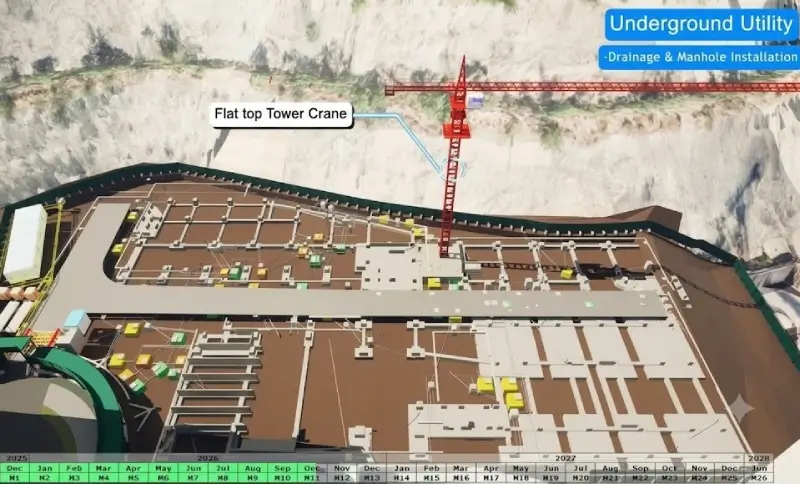
Our 4D BIM modeling services are built around your real construction programme:
Connecting the 3D model to your programme so each element appears in build sequence.
Identifying sequencing conflicts, not just spatial ones, before they cause delays.
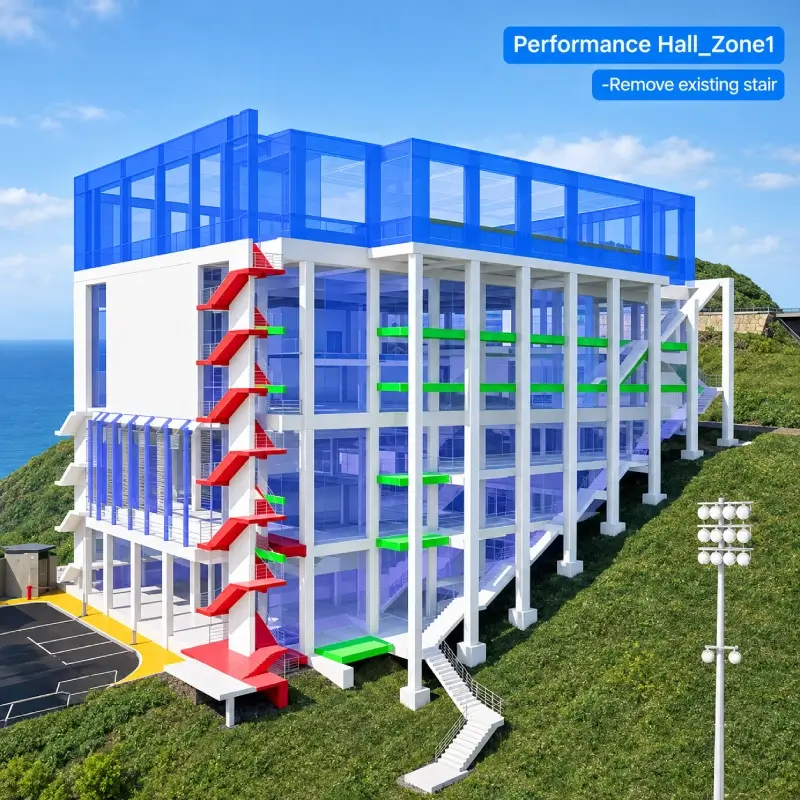
As a 4D BIM company Hong Kong contractors turn to, we know a construction sequence means something different depending on who’s reading it. Contractors want to see logistics and phasing, project managers want a story they can tell clients, and authorities want evidence that the plan has been thought through. Whichever service you need, from full 4D BIM Modeling Services Hong Kong through to a single sequencing review, a well-built 4D sequence can speak to all of these audiences at once, rather than needing a different version for each one.
Whichever role you’re in, the sequence gives everyone a shared reference point for planning and communicating the build, rather than working from a different mental picture of the programme.
Hong Kong’s construction environment makes sequencing harder to get right on paper alone.

Dense urban plots leave little room for error in access and logistics planning.
4D sequencing helps avoid trades competing for the same space and time.
Catching sequencing issues digitally avoids costly delays once work is underway.
Visual sequences are easier for clients and authorities to follow than a programme chart alone.
Share your programme and 3D model with us and we’ll show you what a 4D sequence would reveal about your construction plan.
4D BIM is the practice of linking a 3D building model to a construction schedule, so the build sequence can be visualised and tested before work starts on site.
4D BIM helps identify sequencing conflicts, plan site logistics, and communicate the construction plan more clearly to clients and contractors.
Yes, 4D BIM builds on an existing 3D model, so this is typically added once architectural and structural modeling is in place.
Yes, catching sequencing and logistics issues in the model reduces the chance of costly surprises once construction is underway.
A standard programme is a chart of tasks and dates, while 4D BIM shows those tasks visually against the actual 3D model, making sequencing issues easier to spot.
4D BIM is commonly built using Navisworks or similar scheduling-linked platforms, connected to a Revit-based 3D model.
It’s most valuable on projects with tight sites or multiple trades working together, but even mid-sized projects benefit from clearer sequencing.
Yes, 4D sequencing is often used alongside site logistics planning to check crane reach, storage areas and access routes at each stage.
Contractors, project managers and clients all use 4D sequences, usually for planning, coordination meetings and stakeholder presentations.
Send us your current programme and 3D model, and we’ll scope what a 4D sequence would look like for your project.

The company is a consultant specializing in Building Information Modelling, Laser Scanning, 3D printing, Structural Engineering and MEP/MiMEP Coordination.
FOLLOW US ON :
